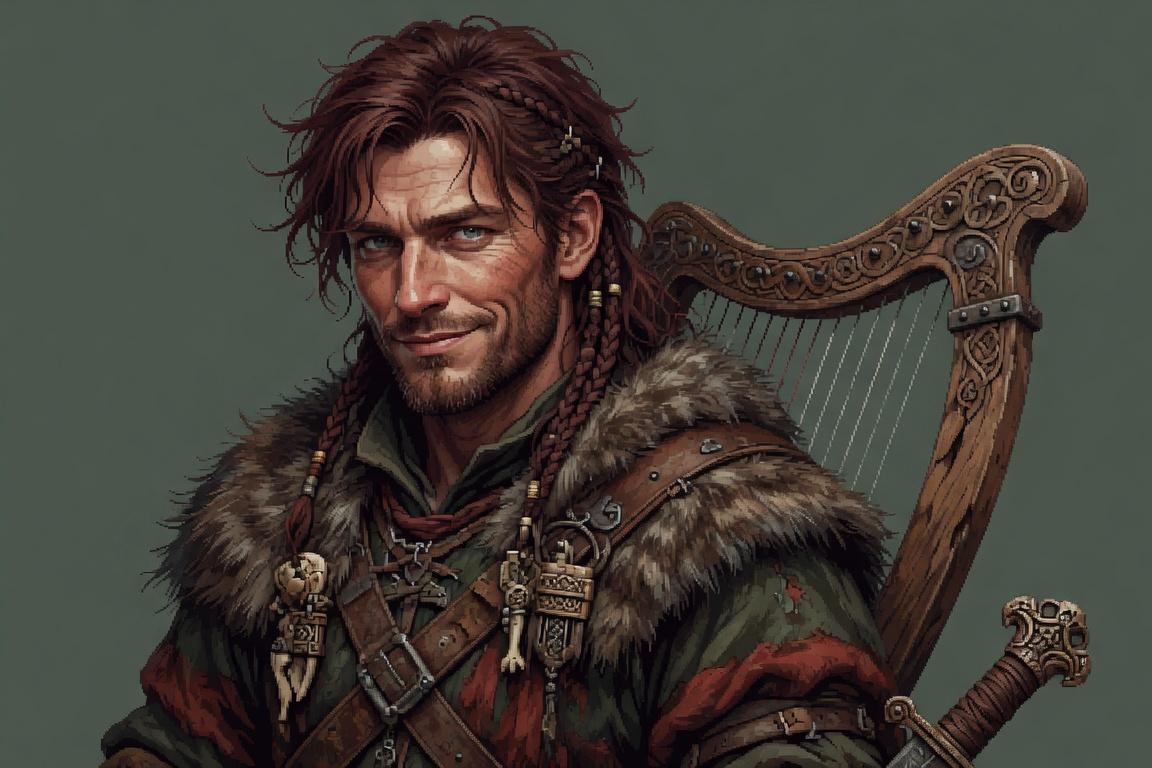
Among the free folk it is sung that Bael the Bard was the greatest raider of his age, a King-Beyond-the-Wall who outwitted the lords of Winterfell as readily as he charmed them, though whether such a man ever drew breath remains a matter of dispute, for the old chronicles of Winterfell name him nowhere. The wildlings tell that Lord Brandon Stark once called Bael a coward, and to repay the slight the bard climbed the Wall and entered Winterfell under the false name "Sygerrik of Skagos"—a word meaning "deceiver" in the Old Tongue—singing until midnight before the lord's hearth. Asked what reward he wished, Bael begged only the fairest flower blooming in the castle gardens, and Lord Brandon gave him a blue winter rose; come morning the lord's only daughter was gone, and in her bed lay that same rose. The Night's Watch sought the pair beyond the Wall and never found them, for the maid had never left, hiding in the crypts until she returned bearing Bael's child, who in time became the new Lord Stark. Thirty years on, it is told, Bael led the wildling host south as king and met his own son in battle at the Frozen Ford, where, unable to spill his own blood, he let himself be slain. The son carried Bael's head back to Winterfell, and the bard's old love, beholding it, cast herself from a tower in her grief. Maesters reckon the tale riddled with falsehoods, yet still the free folk sing it, and Mance Rayder is said to have made Bael's own cunning the pattern for his life.